

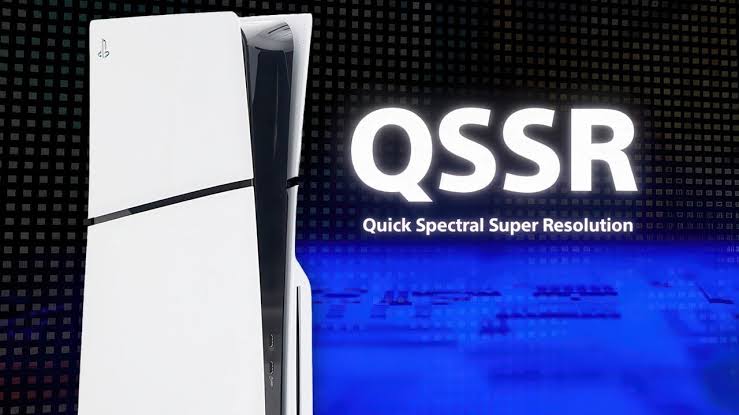
Sony has brought AI upscaling to the standard PlayStation 5 through a new technology called PS5 QSSR, short for Quick Spectral Super Resolution, and the first two games to use it, Marvel’s Wolverine and Ghost of Yōtei, received patches on 1 October 2026. Until now, machine-learning upscaling on PlayStation was tied to PSSR, which only runs on the more expensive PS5 Pro.
For Nigerian players, the timing matters. The standard PS5 is the console most people here actually own, whether bought new, from abroad or second-hand, and the Pro sells at a large premium in local shops. A feature that narrows the visual gap without new hardware is about as practical as console news gets.
| Full name | Quick Spectral Super Resolution |
|---|---|
| Runs on | Standard PS5 |
| First games | Marvel's Wolverine, Ghost of Yōtei |
| Patch date | 1 October 2026 |
| Developed through | Project Amethyst, Sony's AI graphics work with AMD |
| How you get it | As an extra graphics option inside supported games |
How Sony squeezed AI upscaling onto the base PS5
Upscaling lets a game render at a lower resolution and then rebuild a sharper image for your TV, which frees up performance for effects or frame rate. PSSR does this with a neural network on the Pro’s upgraded GPU. The challenge was that the standard PS5 doesn’t have the same AI horsepower, so a straight port wasn’t realistic.
In an announcement on the PlayStation Blog, Daniel Craig, Principal Engineer for Graphics R&D at Sony Interactive Entertainment, explained that QSSR came out of Project Amethyst, the AI graphics collaboration between Sony and AMD. He credited two changes, a streamlined neural network architecture and what he called “a hand-tuned implementation that maximizes performance on PS5.” Sony is also careful about how it positions the two technologies, stating that “while PSSR remains the gold standard on PS5 Pro, QSSR provides some notable improvements to both image detail and image stability on PS5.”
Sony’s post doesn’t list resolution targets, frame rates or which graphics modes use QSSR, and it doesn’t single out any specific PS5 model. The first two games simply add it as another graphics option, so it’s worth checking the settings menu after the patches download.
What Insomniac and Sucker Punch say players will notice
Both studios behind the launch titles point to detail and stability rather than raw resolution. Insomniac Games’ Head of Technology, Mike Fitzgerald, said QSSR “adds more pixel-level clarity and stability to our environments, bringing out extra detail amidst the busy streets of Madripoor, the dense alleyways of Shinjuku, and many other areas across Logan’s epic journey.”
Jasmin Patry, Lead Rendering Engineer at Sucker Punch Productions, went further on Ghost of Yōtei, saying QSSR “excels at resolving the fine details in our characters and environments and does so with a level of temporal stability that hasn’t been possible on the PS5 console until now.” Temporal stability is the part players tend to feel most, because it cuts down the shimmering on foliage, hair and thin edges that shows up when the camera moves.
Should Nigerian PS5 owners still be eyeing the Pro?
Sony says QSSR “will be offered broadly to all PlayStation developers,” so more games should pick it up over time, although it’s up to each studio to patch it in. That makes the standard console a better long-term buy than it looked a week ago, especially for anyone who was weighing a Pro mainly for sharper image quality. The Pro still keeps its advantage, since Sony itself calls PSSR the higher-quality option, but the gap is no longer all or nothing.
If you’re planning a console purchase around the big releases, our guide to GTA 6 price and pre-orders in Nigeria covers the game most people are buying for. You can also see what’s free this month in our rundown of PS Plus October 2026 games. One practical note on patches: QSSR arrives through game updates, so keep an eye on your MTN, Airtel, Glo or T2 data balance before letting large updates run in the background.











Join the conversation