

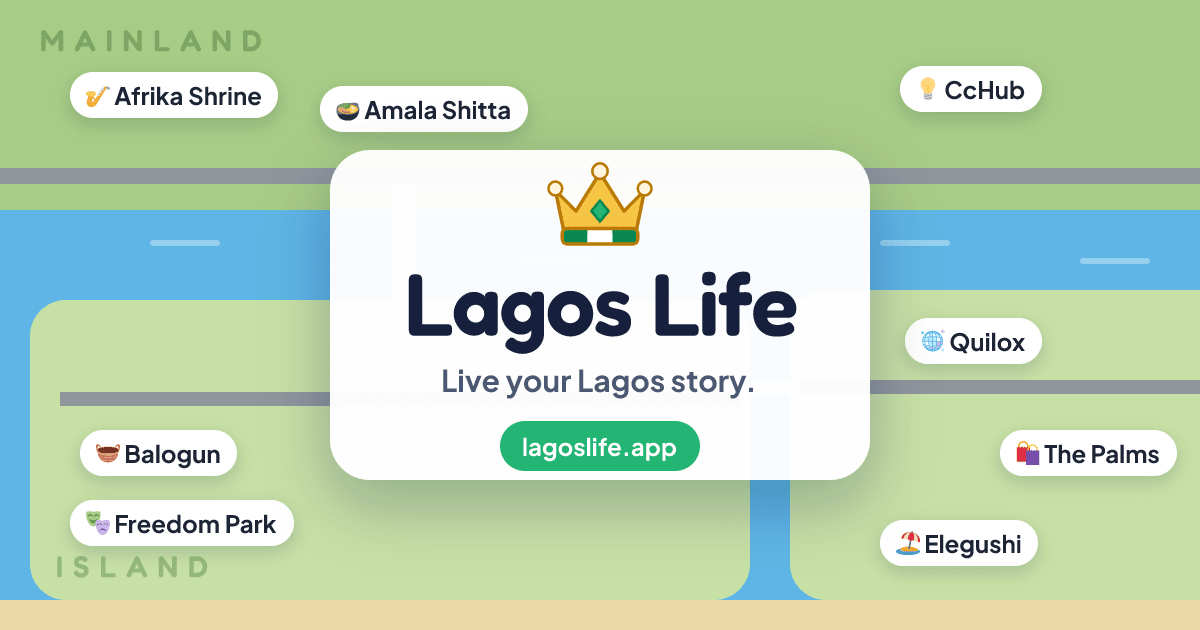
Lagos Life, the Nigerian-made browser game launched on 1 October 2026, reported $46,900 in revenue within its first four days, according to figures posted by its creator, Shalom Rayhamen. Her same update listed 1,807,618 total players, 145,443 people online at once and more than 16.5 million visits. A day later she announced 2 million players and the launch of Abuja and Port Harcourt inside the game.
Those numbers come from the game’s own live dashboard and haven’t been independently audited, but even read with that caution, they make Lagos Life one of the fastest-growing games ever built in Nigeria. Here’s who’s behind it, how it makes money without a price tag, and what its first week means for Nigerian game developers watching from the sidelines.
A Sims fan turned a Lagos joke into a shared city
Rayhamen is a Nigerian software developer who posts on X as @Shalom_HeyEliy, and the game’s official Terms name her as the operator and owner of Lagos Life. She has said the idea came from “The Sims 3”, the life simulator she grew up playing, and that “Lagos Run”, Opeyemi Adeniran’s browser game about driving a danfo through Lagos traffic, gave her the final push to build her own Lagos game.
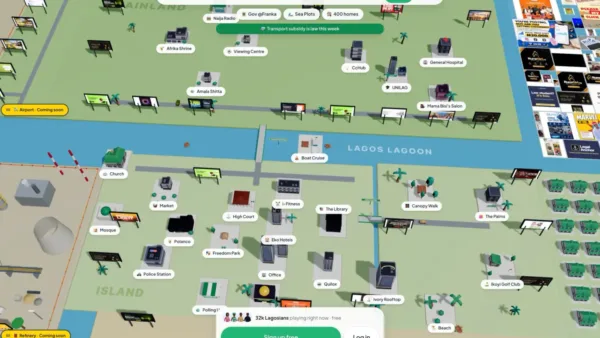
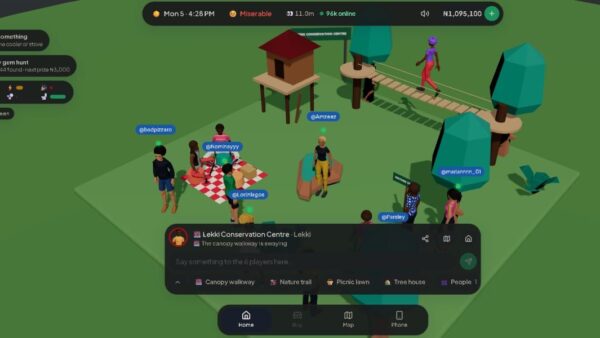
What she built is different from both. Lagos Life drops every player into the same shared city, where you create a character, find a job, pay rent, ride danfo, eat amala at Shitta, party at Quilox and deal with NEPA, all while chatting with real people around you. That social layer is a big reason it spread so fast, because a game that feels like your own city is much easier to share with friends than one set somewhere generic.
She has also said the first version came together remarkably quickly, and that she’s since brought in a small team to help with operations, product, marketing and support as the player count exploded.
How a free game made $46,900 in four days
Lagos Life costs nothing to play, so its money comes from two places spelled out in its own policies. The first is game naira, which players can buy with real money through an in-game wallet. Payments are processed through Flutterwave, and the Terms note that payments before 6 October 2026 were handled by Bachs. The game naira itself can’t be withdrawn or exchanged for real money, which keeps it an entertainment purchase rather than a financial product. We’ve broken down exactly how game naira works and when refunds apply in a separate guide.
The second is advertising, and this is where Lagos Life looks more like a media business than a typical indie game. Its official advertising page sells square ad spaces beside the live player counter at ₦500,000 for 7 days, bookable without an account and live as soon as payment clears. The Terms list a much wider range of placements too, including in-game billboards, branded venues, branded clothing and consumables, sponsored events and apps on the virtual phone your character carries.
Brands that pay are labelled as an Official Partner, Sponsor or Advertiser, while the official Disclaimer makes clear that other real names in the city, from banks to clubs, don’t mean a commercial deal exists. That distinction protects players from fake “brand promos” and gives genuine advertisers a clear label to pay for.
| Revenue stream | How it works | Source |
|---|---|---|
| Game naira top-ups | Players buy virtual currency through the in-game wallet, processed by Flutterwave | Terms of Use and Privacy Policy |
| Stats page ads | Square ads beside the live player counter, ₦150,000 for 7 days | Official advertising page |
| In-world advertising | Billboards, banners, branded buildings, venues, products and events | Terms of Use |
| Virtual phone apps | Brands placed as apps on the in-game smartphone | Terms of Use and Disclaimer |
The $100,000 offer that suddenly looked small
Before the revenue figure landed, an offer to buy the game for $100,000 was being passed around on X. Once Rayhamen posted that the game had earned $46,900 in four days, replies quickly pointed out that the offer was worth barely more than a week of income at that pace. Whatever happens with buyers, the moment showed how fast a Nigerian-built game’s value can be re-rated when its audience is this large.
Early revenue in a viral week isn’t the same as steady income, of course. Player numbers usually fall once the novelty fades, and the real test for Lagos Life will be whether brands keep booking ads and players keep topping up over the coming months.
Growing pains arrived as fast as the players did
A shared economy with millions of players attracts people looking for shortcuts, and in its first week players reported inflated balances created through exploits. Rayhamen responded by resetting the unfair funds and promising fixes, which lines up with Terms that let the game reverse balances obtained through fraud, bugs or abuse of a mechanic. She has also said publicly that the team is working on inflation inside the game’s economy.
The game’s policies show it was built with this kind of pressure in mind. The Privacy Policy says it runs on DigitalOcean infrastructure and uses device fingerprinting to catch bots, account farming and fraud, and players can report and block others. For a game that went from zero to over a hundred thousand concurrent players in days, keeping the servers and the economy stable is now as important as adding features.
Players asked for their cities, and they got them
The clearest sign of how Rayhamen is running Lagos Life is how quickly she responds to players. When people outside Lagos asked for their own cities, she shipped Abuja and Port Harcourt within days, announcing it with the line “You asked for your cities. I built them.” The Terms already describe Lagos Life as one game world that can include other Nigerian states and cities, so the expansion looks like part of a bigger plan rather than a one-off, and our rundown of the Abuja and Port Harcourt update covers what changed for players.
That approach, listening in public and shipping fast, is a big part of why players feel ownership of the game. It also creates pressure, because every new feature brings more players and more ways for the economy to break.
Why this matters for every Nigerian game developer
Lagos Life skipped the Play Store and App Store completely, which removed the two biggest hurdles Nigerian players face with new games, namely limited phone storage and the data cost of big downloads. Anyone with a browser and a link could start playing in seconds, and that’s exactly how it moved through WhatsApp, X and TikTok so quickly. The same openness has brought a wave of copycat sites, which is why knowing the official Lagos Life addresses matters for players.
It also proves that local payments and local advertising can fund a Nigerian game from day one, without waiting for international investors. Combined with support programmes like Google Play’s indie games fund for African developers, there’s now a clearer path for studios building for Nigerian players first. Lagos Life joins a growing list of games built by Nigerians that deserve more attention, and it’s set a very high bar for the next one.
You can follow the live numbers yourself on the game’s official stats page, and the next few weeks will show whether Lagos Life becomes a lasting Nigerian gaming company or a brilliant viral moment.

Join the conversation